It's the question almost every buyer asks before they order: how fast does this thing actually go? The honest answer is "it depends" on motor power, battery voltage, rider weight, and how the kart is built. Some electric go-karts top out around 15 mph. Others, built properly for adult riders, push well past 60 mph.
In this guide, we'll break down what actually determines an electric go-kart's speed, where different builds land on that scale, and what to expect from a kart built specifically for adult drivers rather than a resized kids' toy.
What Is the Average Speed of an Adult Electric Go-Kart?
Most electric go-karts for adults fall into one of three performance tiers.
Entry-Level Electric Go-Karts
Built for beginners and casual recreational use. Typical setup: 24V–36V battery, 500W–1000W motor. Average top speed: 10–20 mph (16–32 km/h). Fine for younger riders or relaxed driving on private property, but these aren't built around adult weight or adult expectations of "fast."
Mid-Performance Electric Go-Karts
A real step up in power and responsiveness. Typical setup: 48V battery, 1000W–2000W motor, better brakes and suspension. Average top speed: 20–35 mph (32–56 km/h). This is where most generic "adult" go-karts on the market actually sit — usable, but still short of what a real performance build delivers.
High-Performance Electric Go-Karts
Built for experienced drivers who want real acceleration and a real ceiling. Typical setup: 60V–72V battery, 3000W–4000W+ motors, heavy-duty chassis, hydraulic brakes. Top speeds land in the 40–65 mph range.
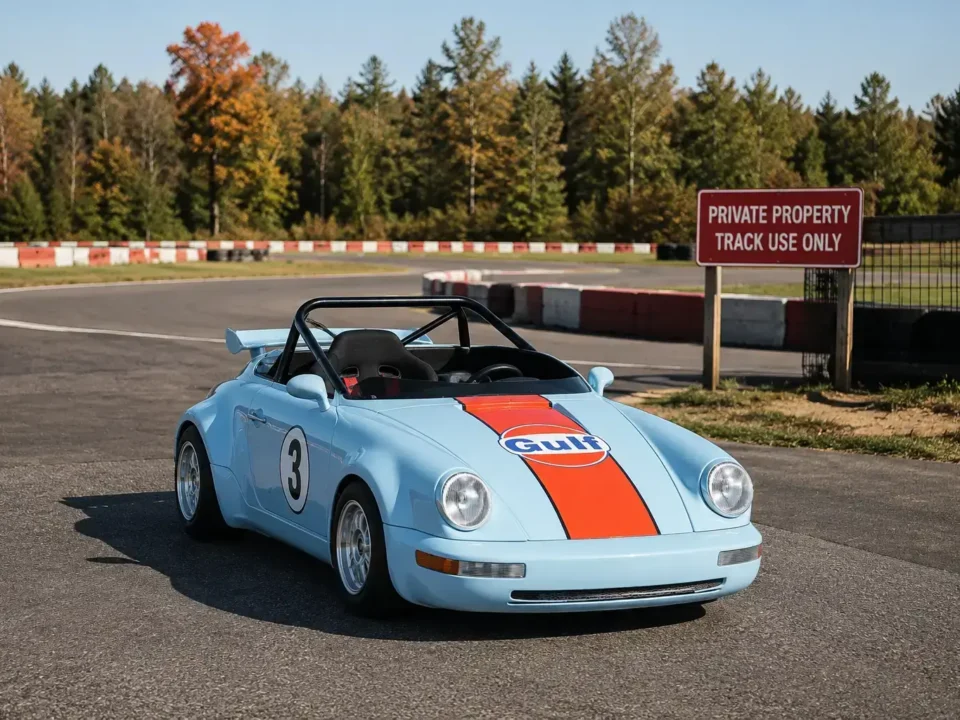
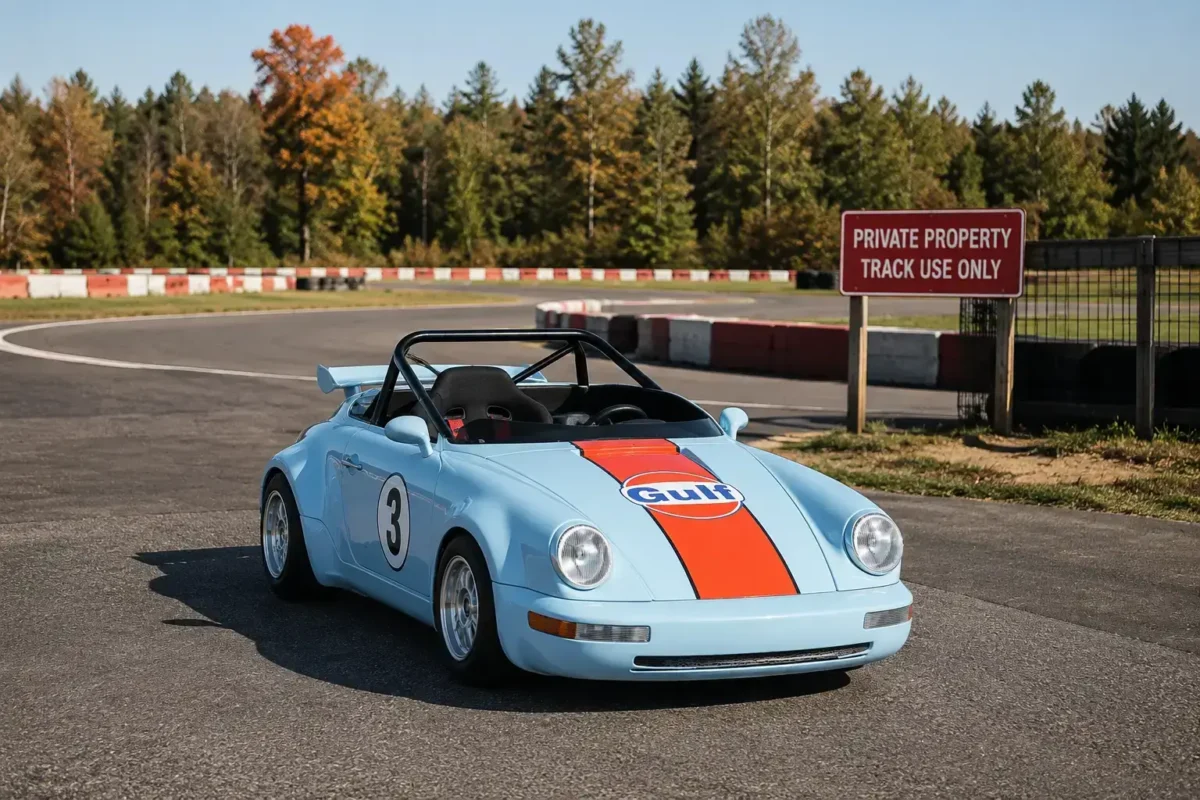
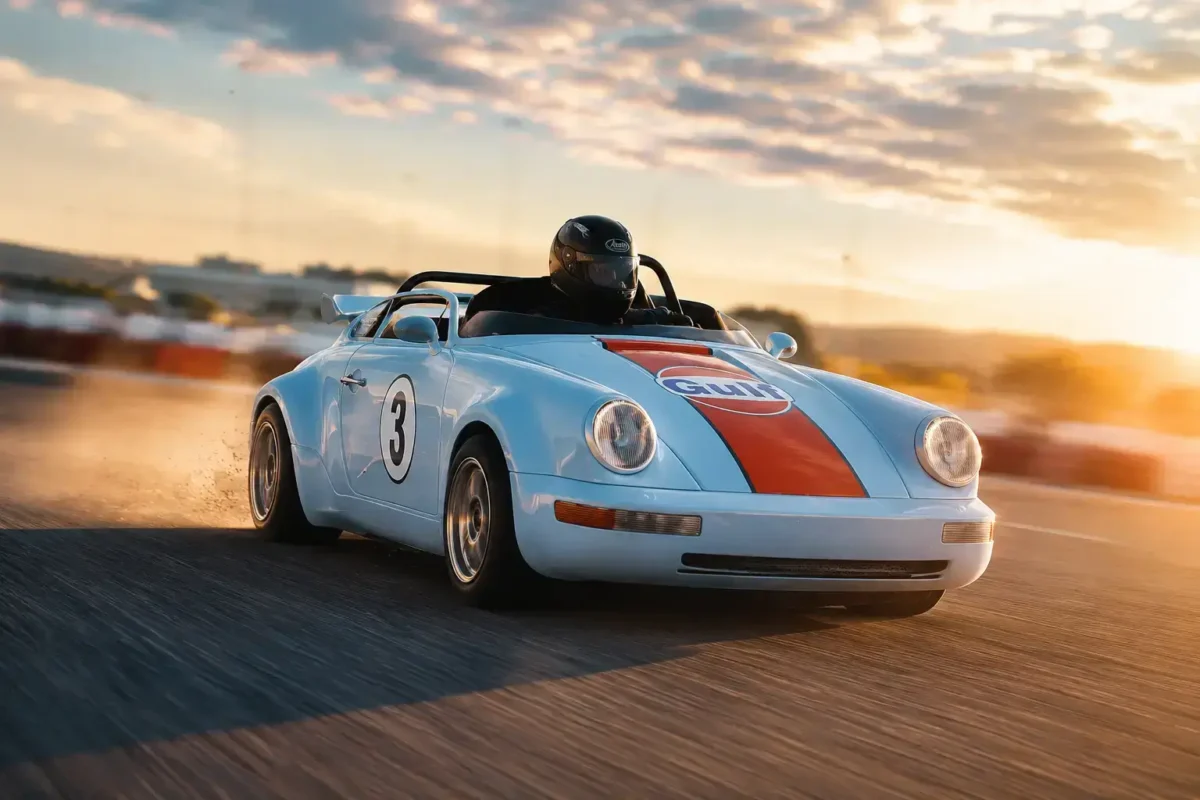
This is the tier our own karts are built in. Every model in our lineup the Legend 911, the Legend R34, the Legend F40, and the Legend AE86 — runs a 3000W standard motor or 4000W performance motor, reaching up to 45 mph in standard mode and up to 65 mph in performance mode. That's a welded steel chassis and hydraulic disc brakes doing the work, not a resized toy chassis pushed past its limits.
What Determines the Speed of an Electric Go-Kart?
Motor Power
Motor wattage drives acceleration and top speed. As a rough guide: 500W is beginner-level, 1000W is recreational, 2000W starts feeling like sport performance, and 3000W+ is where real high-performance driving begins. A stronger motor also matters more than people expect when climbing hills or carrying a heavier rider which is exactly why we don't build our karts around a single underpowered option.
Battery Voltage
Voltage determines how much power reaches the motor. Common systems run 24V, 36V, 48V, 60V, or 72V. Our karts run on a 72V swappable lithium pack — the same tier used by the high-performance category above, paired with a 3000W or 4000W motor depending on the build you choose.
Battery Capacity
Capacity (measured in Ah) mainly affects how long you can ride, not how fast you go. A bigger pack means a longer session before you need to swap or recharge.
Rider Weight
Heavier riders see reduced acceleration and slightly lower top speed, especially on karts that weren't built with adult weight in mind in the first place. This is one of the biggest reasons a "kids' kart resized for adults" underperforms compared to a kart engineered around a 440 lb load capacity from the start — which is what you'll find on every model we build.
Terrain
Flat pavement lets a kart hit its real top speed. Grass, gravel, hills, or rough terrain all cut into that number. Every one of our karts is built for private property, closed tracks, or controlled off-road use — never public roads.
Tire Size
Bigger tires can raise theoretical top speed, but only if the drivetrain and gearing are actually tuned for them. Manufacturers who don't account for this end up with a kart that looks fast on paper and feels sluggish in the seat.
Are Electric Go-Karts Faster Than Gas Go-Karts?
Not necessarily on paper dedicated racing gas karts can out-top-speed most electric builds. But electric go-karts have one major advantage: instant torque. Power hits the moment you touch the throttle, with no lag, no clutch, no warm-up. For most riders, that instant response makes an electric kart feel quicker off the line than a gas kart with a higher advertised top speed.
How Fast Does a 48V Electric Go-Kart Go?
Most 48V electric go-karts reach approximately 20–35 mph, depending on motor wattage, rider weight, and terrain. That's a reasonable recreational speed but it's a full tier below what a 72V system delivers, which is why we build on 72V rather than 48V.
How Fast Does a 1000W Electric Go-Kart Go?
A 1000W motor typically delivers 15–25 mph solid for a beginner-friendly ride, but well short of adult performance expectations.
How Fast Does a 2000W Electric Go-Kart Go?
A 2000W motor generally reaches 25–40 mph depending on battery voltage and drivetrain. Noticeably more exciting than entry-level, still a step below our 3000W standard and 4000W performance builds.
Can an Electric Go-Kart Reach 70 MPH?
Only highly modified or purpose-built competition karts get close to 70 mph, and they typically require high-voltage battery systems, large brushless motors, racing controllers, and reinforced chassis well beyond what a standard consumer kart offers. Our performance builds top out at 65 mph deliberately, because that's the ceiling where the chassis, brakes, and safety harness are all rated to perform reliably, rather than chasing a number that outpaces the rest of the build.
Are Electric Go-Karts Safe at High Speeds?
As speed goes up, so does the importance of what's underneath you. A kart built for real speed should have a reinforced steel frame, hydraulic disc brakes, responsive steering, and a proper safety harness — which is exactly what's built into every kart we sell: a TIG-welded steel tube frame, dual hydraulic disc brakes, and a 4-point racing harness as standard.
Whatever kart you ride, always wear a certified helmet, gloves, closed-toe shoes, and protective clothing. Speed is only fun when the safety gear underneath it is real.
Choosing the Right Speed for Your Needs
The fastest kart isn't automatically the right one. Think about your experience level, where you'll actually ride, how much range you need, and how much top-end speed you'll realistically use. That's exactly why we build every model with tunable speed modes Learner, Sport, and Legend so the same kart can start conservative and grow with you, rather than locking you into one ceiling from day one.
Not sure which model or power option fits you best? Start a Custom Build and we'll walk you through it, or browse the full lineup to compare specs side by side.
Frequently Asked Questions
What electric go-karts go 25 mph?
Many 48V karts with 1000W–2000W motors reach around 25 mph, depending on rider weight and terrain.
Is 25 mph fast for a go-kart?
For recreational driving, yes — it's exciting while staying manageable for most adult riders. It's also well below what a dedicated performance kart delivers.
What is the fastest electric go-kart?
Racing and custom-built electric go-karts can exceed 60 mph, with specialized builds approaching or surpassing 70 mph on closed tracks. Our performance models top out at 65 mph.
Are electric go-karts worth buying?
For the right buyer, yes — instant acceleration, quiet operation, lower maintenance, and a genuinely fun ride. Read our full breakdown in Are Electric Go-Karts Worth It? for the honest tradeoffs.
Final Thoughts
Modern electric go-karts for adults deliver more performance than most people expect from beginner-friendly karts cruising at 15 mph to performance builds like ours reaching 65 mph. The difference isn't just the number on the spec sheet; it's whether the chassis, brakes, and safety gear were actually built to handle that speed. Explore our lineup to see what a kart built specifically for adult riders actually feels like.