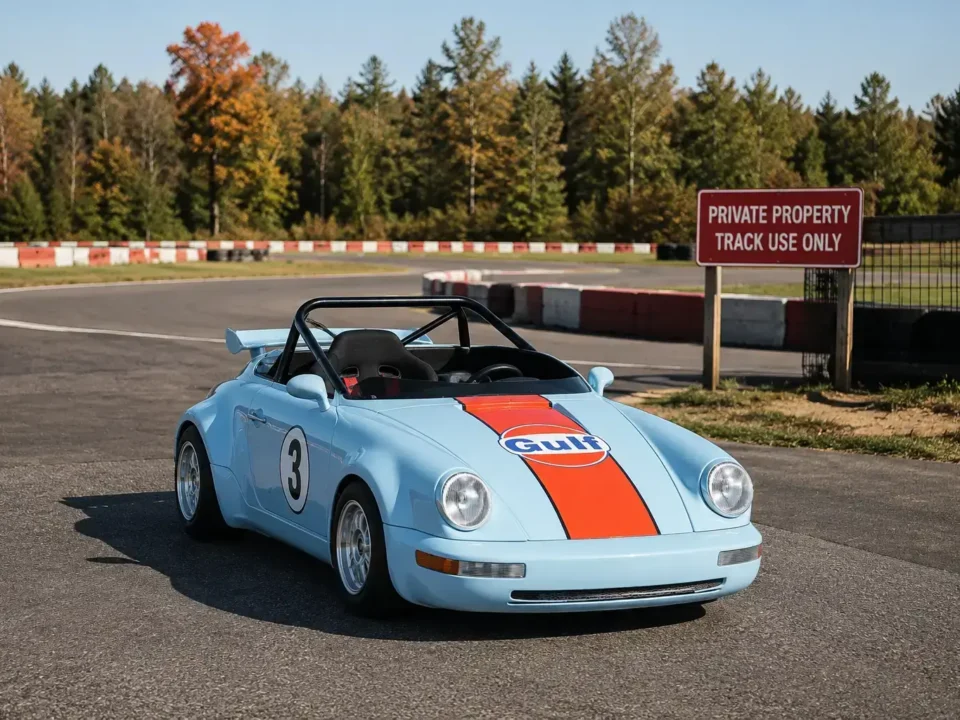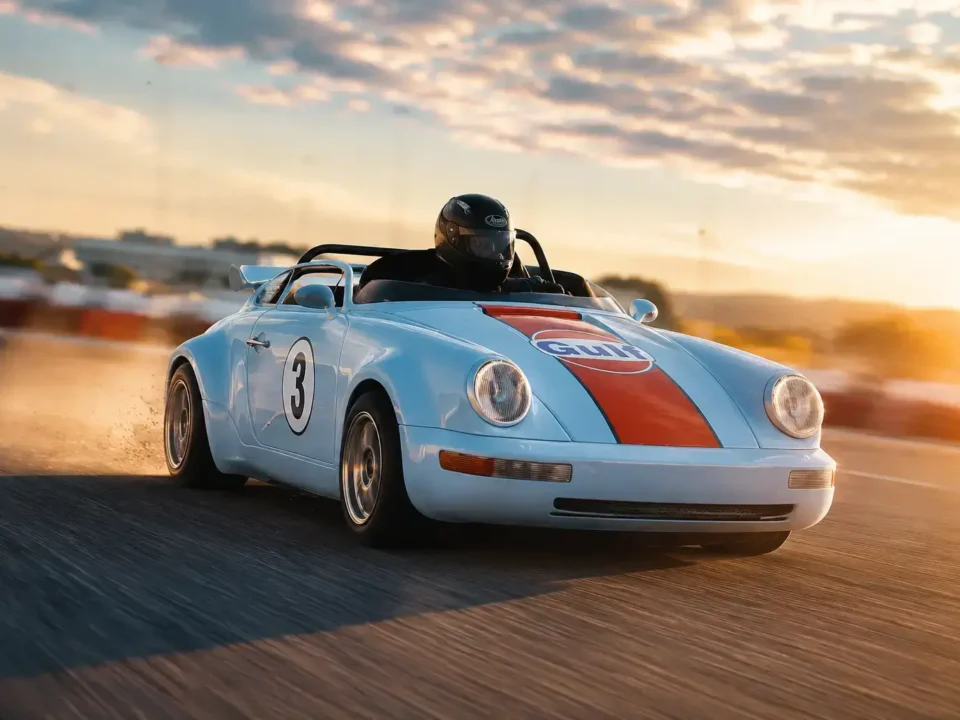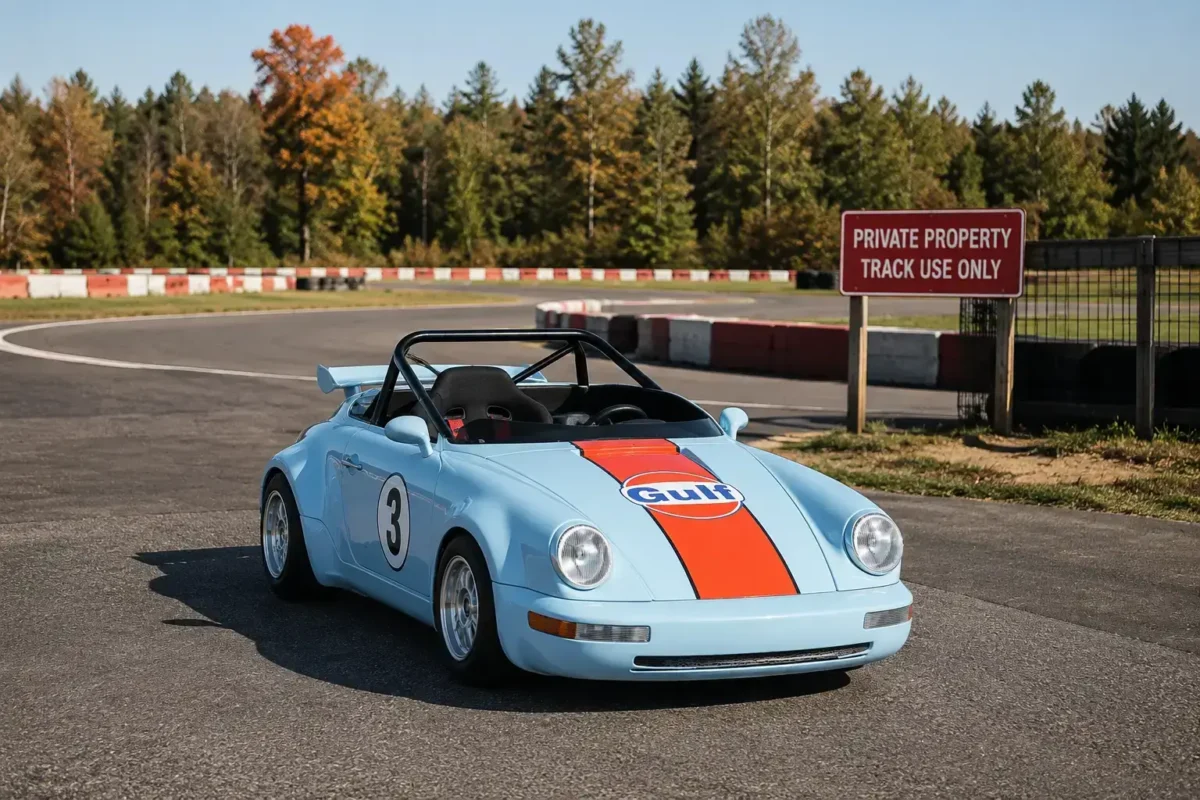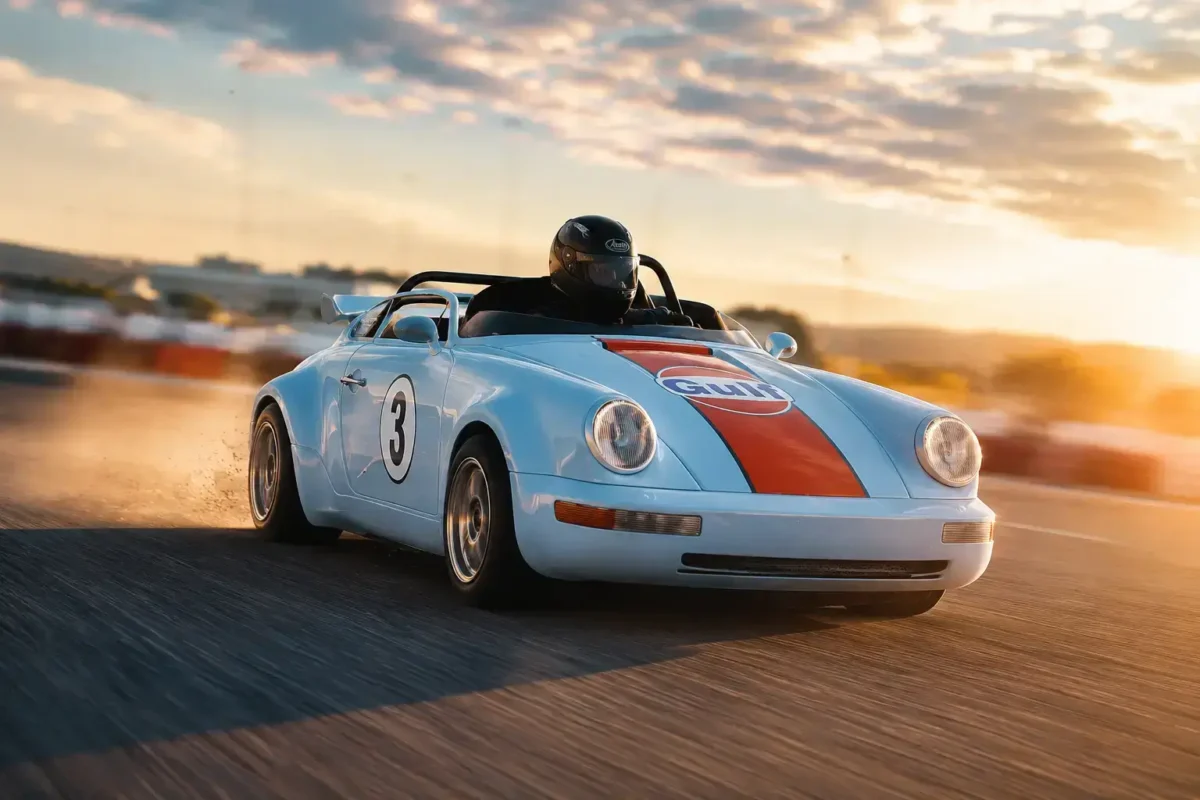
Drifting has become one of the most exciting corners of motorsport culture, and thanks to modern electric drivetrains, electric drift go-karts for adults now offer a real, accessible way to experience controlled sliding — no full-size drift car, no fuel bill, no garage full of spare tires.
But how does drifting actually work on a kart? Can any electric go-kart do it? And what should you actually look for if drifting is the point, not an afterthought? Here's the breakdown.
What Is an Electric Drift Go-Kart?
An electric drift go-kart is built to let the rear wheels lose traction in a controlled, predictable way while the driver keeps steering authority — the opposite priority of a standard recreational kart, which is tuned to maximize grip and stability.
Most karts built for drifting share a few traits: a high-torque electric motor, a low center of gravity, responsive steering, a lightweight-but-rigid chassis, rear-wheel drive, and tires or drift sleeves that release grip predictably. Our Legend AE86 — modeled after the car that basically defined drift culture — is built around exactly this: a TIG-welded steel chassis kept low and planted, paired with a 3000W standard or 4000W performance motor for the torque a good drift actually needs.
How Does Drifting Work?
Drifting happens when the rear tires lose grip while the front tires keep steering the kart through the corner — instead of tracking straight through the turn, the kart slides sideways under the driver's control.
A clean drift comes down to three things working together: steering input, throttle control, and weight transfer. The driver deliberately breaks rear traction, then manages the slide with the wheel and the accelerator. Electric motors are particularly good at this because they deliver full torque the instant you press the throttle — no lag waiting for RPM to build like a gas engine.
Why Electric Go-Karts Are Great for Drifting
Instant Torque
Electric motors hit peak torque almost immediately, which makes initiating and holding a controlled drift far easier than waiting on an engine to spool up.
Smooth Power Delivery
No power band, no gear shifts mid-slide — just consistent, predictable acceleration that lets you make fine throttle adjustments while you're sideways.
Quiet Operation
Electric drift karts run far quieter than gas models, which matters if you're practicing on private property where noise is a real consideration for neighbors or venue rules.
Low Maintenance
No oil changes, spark plugs, fuel systems, or carburetors. Less time in the garage, more time actually sliding.
What Makes a Good Electric Drift Go-Kart?
Not every electric go-kart is built to drift well. A few things separate a real drift-capable kart from a standard recreational one:
- Rear-wheel drive — lets the rear break traction while the front keeps steering
- A powerful motor — common ranges run from 1000W up through 3000W–5000W+ for real performance
- A lightweight chassis — changes direction faster during transitions
- A low center of gravity — keeps the kart stable mid-slide
- Responsive steering — lets you correct the drift smoothly instead of chasing it
- Drift-appropriate tires — specialized rear tires or drift sleeves that release grip in a controlled way
Every kart in our lineup — AE86, R34, 911, and F40 — shares the same welded steel chassis, hydraulic disc brakes, and low-center-of-gravity build, so the fundamentals are there regardless of which body style you pick.
Is Drifting Difficult for Beginners?
It takes practice, but a well-built electric drift kart makes the learning curve far more forgiving than most people expect. Start with smooth steering inputs, gentle throttle control, looking through the corner rather than at it, and practicing on open pavement. Weight transfer becomes intuitive faster than you'd think once the fundamentals click — and our tunable Learner-to-Legend speed modes mean you're not thrown straight into the deep end on day one.
Where Can You Drift an Electric Go-Kart?
Drifting belongs on private property, closed kart tracks, drift training facilities, motorsport parks, or large paved areas with permission — never on public roads, sidewalks, unauthorized parking lots, or anywhere pedestrians or traffic are present. Every kart we build is designed and sold strictly for private property and closed-course use; see our full breakdown in Is It Legal to Ride an Electric Go-Kart on the Road? for the details on where you can and can't ride.
How Fast Does a Drift Go-Kart Need to Be?
Less than most people assume. Controlled drifting typically happens at moderate speeds — often somewhere in the 20–35 mph range depending on the surface and setup, not flat-out top speed. Higher speeds demand real experience and belong strictly in controlled environments. For the full picture on what our karts are capable of at both ends of that range, see How Fast Can an Electric Go-Kart for Adults Actually Go?
Are Electric Drift Go-Karts Safe?
Used responsibly, yes. What matters is what's under you: a reinforced steel frame, a reliable braking system, stable steering geometry, and real tires — not a lightweight frame flexing under load. Every kart we sell runs a TIG-welded steel chassis, dual hydraulic disc brakes, and a 4-point racing harness as standard.
Always wear a certified helmet, gloves, closed-toe shoes, and long sleeves and pants. Good habits matter as much as the kart itself.
Electric Drift Go-Kart vs Traditional Gas Go-Kart
Both can deliver a great drift experience, but they behave differently. Electric karts bring instant torque, quiet operation, lower maintenance, smooth acceleration, and precise throttle response — ideal for learning and refining technique. Gas karts bring longer continuous run time, quick refueling, and the traditional engine feel some drivers prefer. For most riders learning to drift, the smoother, more predictable power delivery of an electric motor makes it the easier platform to actually improve on.
How to Choose the Best Electric Drift Go-Kart for Adults
Look past the marketing and check: motor power, battery voltage and capacity, rider weight limit, chassis strength, steering quality, brake performance, parts availability, and overall build quality. A kart that checks all of these delivers better handling, more durability, and a genuinely better drifting experience — not just a higher number on a spec sheet.
Not sure which model fits your riding style? Start a Custom Build to configure yours, or browse the full lineup to compare specs side by side.
Frequently Asked Questions
Can every electric go-kart drift?
No. Standard recreational karts are built to maximize grip. Drift-capable karts use different tires, chassis geometry, and power delivery specifically to make controlled sliding easier.
Is an electric drift go-kart good for adults?
Yes — the good ones are built specifically for adult riders, with larger frames, higher weight capacities, and motors powerful enough to actually break traction on demand.
Are electric drift go-karts faster than regular electric go-karts?
Not necessarily. Drift-focused builds prioritize balance, handling, and throttle response over raw top speed.
Can beginners learn to drift?
Absolutely. With practice, a safe environment, and a kart with tunable speed modes to start conservative, beginners can pick up basic drift technique fairly quickly.
Do drift tires wear out?
Yes. Drift sleeves and rear tires are wear items — inspect them regularly and replace them when needed to keep your slides predictable.
Final Thoughts
An electric drift go-kart for adults is one of the most accessible ways to actually learn and enjoy controlled sliding — instant torque, responsive steering, and a chassis built for it make the whole experience far more approachable than people expect. Whether you're a lifelong drift fan or just curious, the difference between a real drift-capable kart and a toy that slides by accident comes down to what's actually built underneath the bodywork. Check out the Legend AE86 — built on the exact car that made drifting famous — to see what that looks like in practice.